Lincoln City doesn’t usually get a lot of snow but, wow, did we ever get some snow last night. By most local’s estimations there is between 4 and six inches of accumulated snow throughout the area.
Reports and photos began appearing on Lincoln City Homepage community page just after midnight with reports of snow falling around town. By morning’s light it became apparent we had a snowstorm on our hands. This reporter attempted to drive around to get some photos this morning but the side roads near NE 6th Dr were impassible. High snow accumulations along with downed trees and a car in a gully made it reckless to even try to navigate towards Hwy 101. Those with 4 wheel drive rigs seemed to be able to get around town with litlle effort, Lincoln County school district sent out a notice last night notifying all staff and students that all school related activities would be cancelled for at least Thursday the twenty third.
Photo courtesy James Scrutton
Emergency crews are going to be busy as are local cab companies. Stay home, if able. If not, be ready to exercise patience.
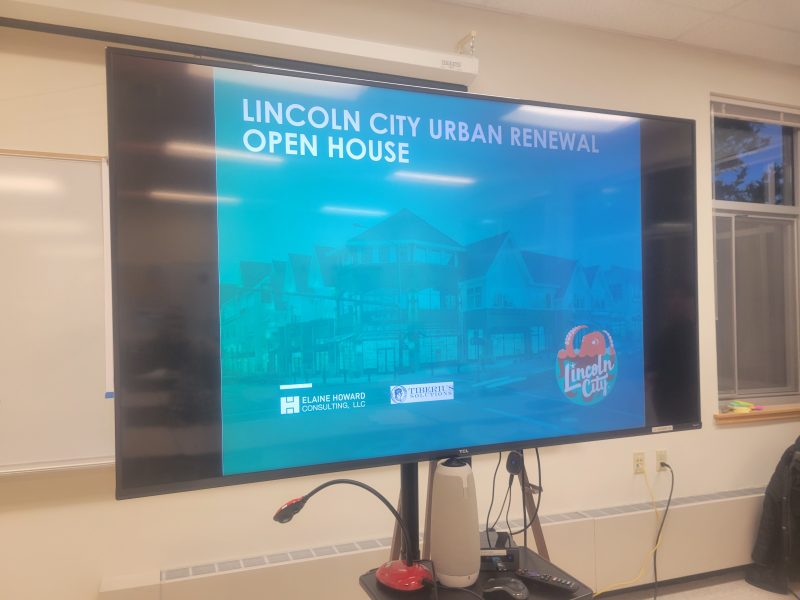
Alison Robertson outlines city plansLincoln City presentation PowerPoint
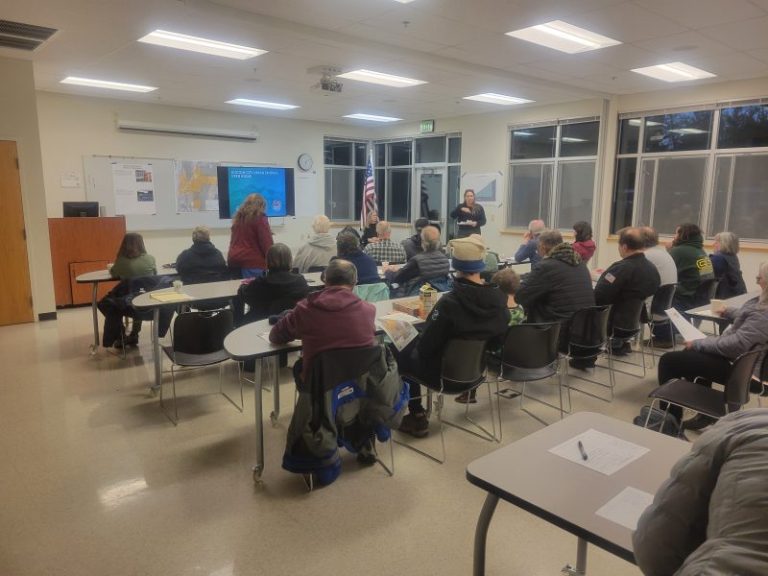
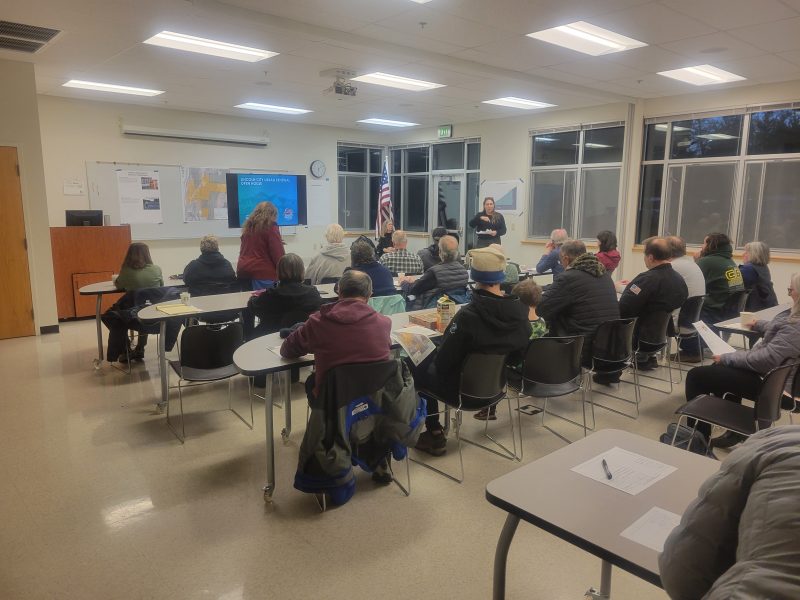
On Wednesday night February 15, Urban Renewal department director Alison Robertson laid out the city’s Urban Renewal vision for the Nelscott district of Lincoln City.
Held in the community room at Oregon Coast Community College (OCCC), Robertson spent the first half hour laying the groundwork for what the city has in mind for projects in the Nelscott area.
The room was filled to capacity with residents, business owners and one young man who patiently ate pizza and played with his toy while his dad sat and listened,
The basics of Urban renewal were explained to the crowd. Those basics included where the money would come from, what the boundaries were and what projects could potentially be accomplished within the proposed twenty five year lifespan of the district.
A short question and answer period followed with most attendees seeming willing to accept the idea of the district being established except for one man that asked “What if we don’t want any of it?”
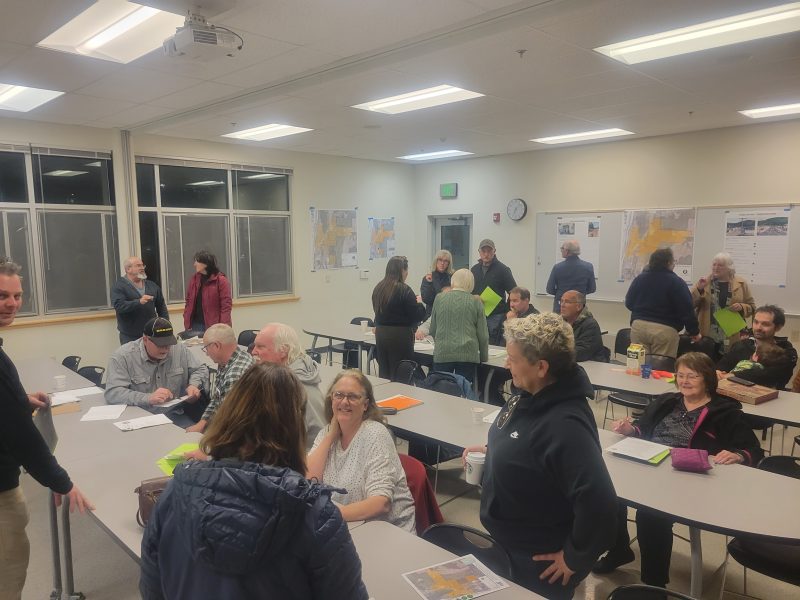
Attendees discuss the proposal
Members of the audience were directed to place a colored adhesive dot next to projects they approved of.
A few of the projects were:
Improved road connections between SE Lee and SE Twenty third.
A new connection between SE Twenty third Drive and Thirty second Street/Fleet Avenue connection and pedestrian striping, infill of sidewalk gaps and public parking.
While most of the crowd seemed appreciative of the information some expressed concern that there wasn’t sufficient notice given.
A common complaint was, “I didn’t even know this meeting was happening until a friend a called me and then we had a hard time figuring out where and when it was.”
Mayor Susan Wahlke was in attendance and said, “I’m really pleased with the turnout and the good questions. I’m glad people are interested in giving us their input.”
The next public meeting will be held at the Eagles lodge 737 SW 32nd St Lincoln City at 6 p.m. on Wednesday March 15th. For more information go to https://www.lincolncity.org/government/urban-renewal-agency
SALEM, Ore. –Senator Dick Anderson (R-Lincoln City) has been appointed to the Housing Production Advisory Council (HPAC) which will be tasked with formulating an action plan to meet the Governor’s 36,000-unit annual housing production target.
Senator Anderson released the following statement:
“It is an honor to be selected to serve on this Council and help promote solutions for the housing crisis. We are in desperate need to find fast and innovative ways to increase the supply of housing in all corners of Oregon.
As Vice-Chair of the Senate Housing Committee, and representing large portions of Oregon’s Coast, I know firsthand the crisis in front of us.
The Governor has ambitious plans to double our housing unit production per year, and I will be an outspoken proponent of cutting red tape, streamlining the process, and getting decisions down to the local level as fast as possible.”
Senator Anderson has 35 years of experience in the housing and mortgage industry and currently serves as Vice-Chair of the Senate Housing and Development Committee.
National Weather Service Portland (NWS) issued a Special Weather Statement, calling for icy roads for a large portion of the Pacific Northwest.
According to NWS:
Cold air is filtering across the region from east of the Cascades
tonight. Any liquid water remaining on surfaces this evening will
freeze overnight. This will result in potentially hazardous travel
on untreated roads and sidewalks as early as 10 PM Saturday night,
but more likely after midnight. Please slow down tonight and
exercise extreme caution as it will be very difficult to see where
surfaces are icy.
The Special Weather Statement was sent out at 5:42 p.m. Saturday, and predicts icy roads as early as 10 p.m.
NWS predicts the low temperature for Lincoln City tonight at 29 degrees.
The Capitol is open, and session has begun! Bills are already flowing to committees. We will start our newsletters again during session to hopefully give you a view on what is happening here in Salem and how things are progressing.
I know another long legislative session has started when I am leaving the coast when it’s dark and returning when it’s darker!
A few initial reactions
It is nice to have the public back in the process. We missed a lot when they were locked out, and I hope legislators and the Governor remember that there is simply no substitute for human interaction when elected officials are in Salem doing the people’s work. They put a lot of trust in us, and we need to return the favor.
It is nice to once again see constituents, sightseers and advocates alike padding around the capitol hallways. Unfortunately, due to ongoing construction, that is about all they can see right now: hallways. Most of the visitor friendly activities and tours are still not available. I’ve included a map identifying public entrances for those interested in making the trek to Salem to see what we do firsthand.
Floor sessions are open to the public and testimony is once again an option– either in-person or remotely during public hearings. Also, the public testimony process has changed. If you want to testify on a bill, you now need to register online before doing so. Click here for a step by step guide on this new process.
Between the Senate and the House, over 1,800 bills have been referred to committees.
Oregon Senate Republican Priorities During the 2023 Session
The 2023 Senate Republican Caucus. Not pictured: Senator David Brock Smith
Saving Oregonians from rising inflation and increased cost of living–returning the Kicker to people, freezing senior property taxes, and championing a variety of other related bills to make life more affordable.
Human dignity in housing and homelessness–supporting housing development goals of 36,000 units per year, tax deductions & incentives, re-criminalizing hard drugs, and more.
Promoting freedom and prosperity for all Oregonians–returning power to the people by limiting overreach, protecting elections, etc.
Modernizing Oregon’s education system and empowering students and parents–increasing access to school choice, curriculum transparency, and more.
Reducing violent crime threatening our communities–supporting 2nd Amendment rights, funding school resource officers, and some important crime bills.
Protecting Oregon’s farms, fisheries, and forests–increased forest management funds, studying rate impacts of greenhouse gas bill, prioritizing Oregon-products to minimize carbon footprint, and much more.
I’ve made no secret about my ongoing priorities: housing, childcare and increasing access to healthcare, especially mental/behavioral health services on the coast. I often refer to these as “the three legs of the stool” for getting us back on track after Covid. These issues are intimately tied to our economic growth, which will be further challenged by a tightening budget, rising costs, and less federal spending.
Given my priorities, being Vice-Chair of the Senate Housing and Development committee and having a position on the Senate Education committee, where all child care bills flow, is a perfect place to be. Anyone who has been in a meeting with me on housing in recent years will have surely heard me say, “If we are in a housing emergency, let’s start acting like it”, and I am encouraged to see an increased focus on housing production vs. just throwing money in that direction. Emphasizing supply is the only way we can make real progress on this issue. It is time to act.
While policy committees are very important, any bill in the capitol that has significant money attached to it passes through the Ways and Means process, as do all state agency budgets. So, I will be using my role on those budget committees to actively engage to ensure we are both being good stewards of people’s hard earned money, and supporting programs and agencies that can demonstrate a track record of efficiency. We should not do something the same way just because that is how it has always been done. And a new Governor along with many new legislators provide a good opportunity to assess what is working and what isn’t.
Ringing Alarm Bells on the Executive Orders Around Homelessness (The coast needs a voice too!)
Speaking of the new Governor, as you might have seen in recent news coverage, I worked with the Coastal Caucus to ring the alarm bells on one of her initial executive orders around homelessness. While applauding her efforts to be more aggressive on housing and homelessness, we were concerned to see the coast once again left out of the executive order in favor of urban population centers. We will be pushing to get more coastal communities at the table in this important conversation around resources and coordination.
Updated Senate District 5
Redistricting brought some new constituencies into my district and I have been working to reach out personally to many of the community leaders and voters to let them know they will have an open door policy and a forceful advocate in me.
Pleased to attend ribbon cutting for the new NW Natural Gas facility in Lincoln City!
Here are the Key Bills I’ve
Introduced or Sponsored for this Session
This year we have a wide range of bills I think will be beneficial to the voters and the communities I serve across Senate District 5. I have bills ranging from taxes, childcare, housing, and coastal issues.
SJR 17 – Proposing amendment to Oregon Constitution relating to a property tax relief program for owner-occupied principal dwellings of certain seniors.
Senate Bill 127 – Increases the corporate tax reporting from $1 million to $5 million.
Senate Bill 533 – Creates a tax deduction for interest paid on boats, homes and ag real estate.
Senate Bill 599 – This will allow for rental homes to be used as family child care home.
House Bill 2980 – This bill I signed on to as Chief Sponsor to help create a revolving loan program for cities and counties to take part of. There is a similar bill HB 2981 for the business development department as well.
SJR 14 – I signed on to this bill to limit the executive powers of the Governor in regards to declaration of emergencies. It is important that we look at limiting the ability of the Governor to declare emergency and then staying in that emergency for way too long.
Stay tuned as it is proving to be a packed session!
All my best
Senator Dick Anderson, Oregon District 5
Serving You. Let’s Connect.
To say things are busy is an understatement, but I am committed to continuing the great work that brought unprecedented funding to Senate District 5 in my first two sessions by always prioritizing the place we love to call home along the Oregon Coast.
But I can’t do it alone. I continue to value input from all of you and from my experienced staff. I have once again built a strong team to help us succeed.
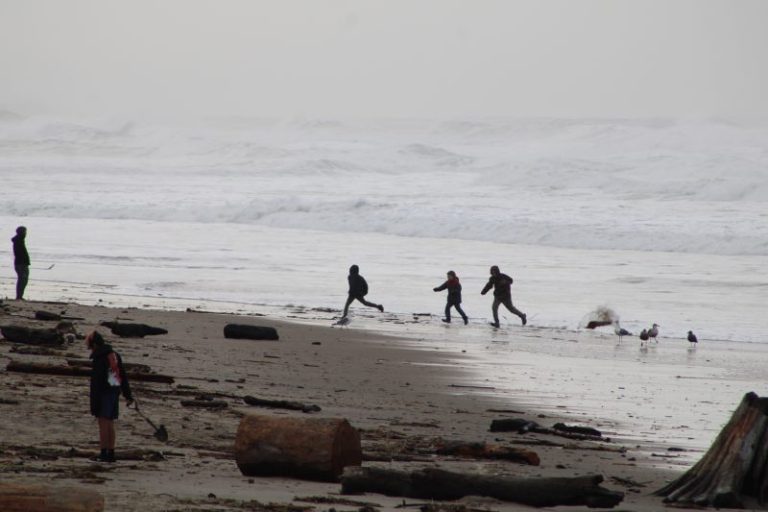
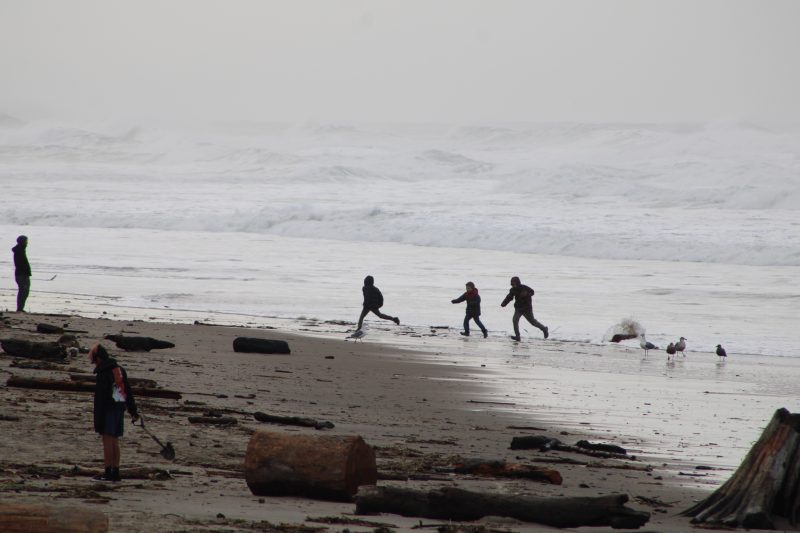
Children run from a wave at D River Beach in Lincoln City (Photos by Justin Werner)
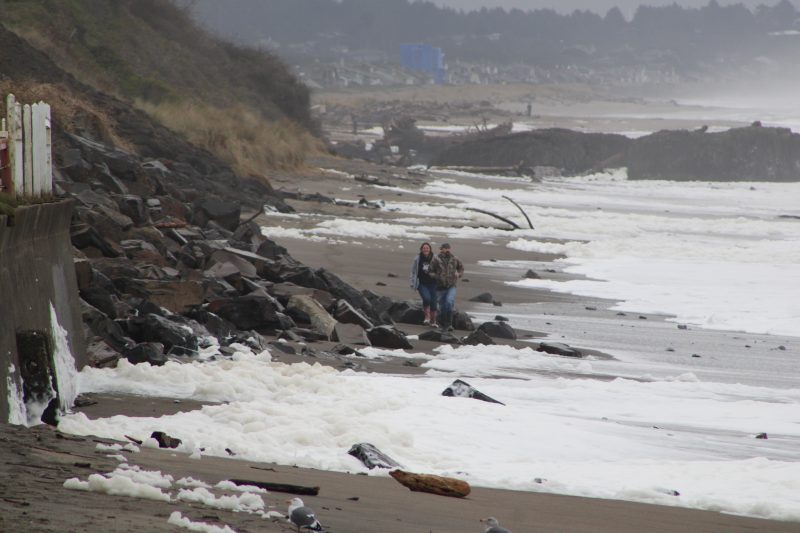
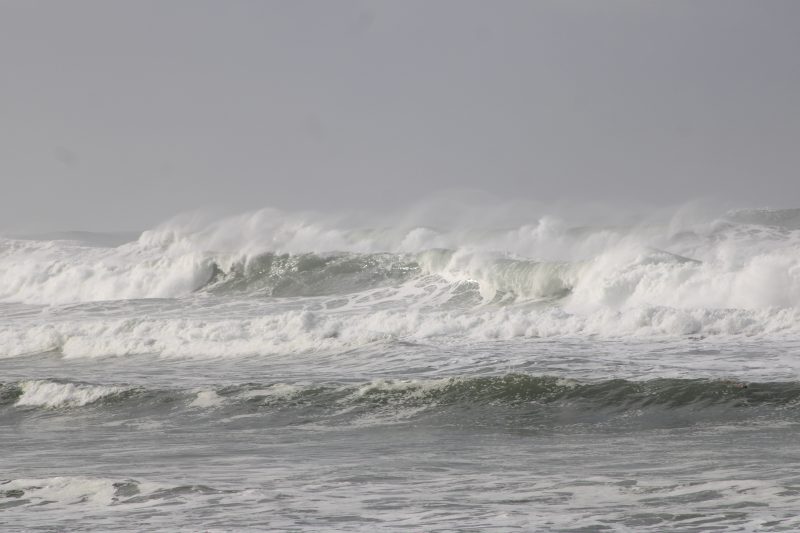
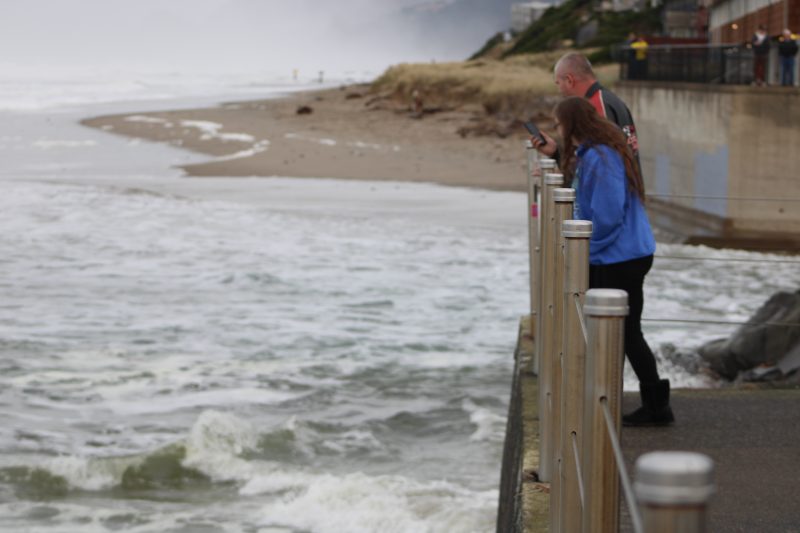
Wave watchers were out in force in Lincoln City Sunday as the Pacific Ocean took over beaches powered by King and Perigean Tides.
Local hotels reported higher than usual numbers of guests for this time of year due to the ocean activity as people came to see the Pacific Ocean King Tide as the moon is closest to Earth.
While not the biggest wave runups in the city’s history, the ocean at times did make beaches disappear and sent more than a few beachgoers running for safety.
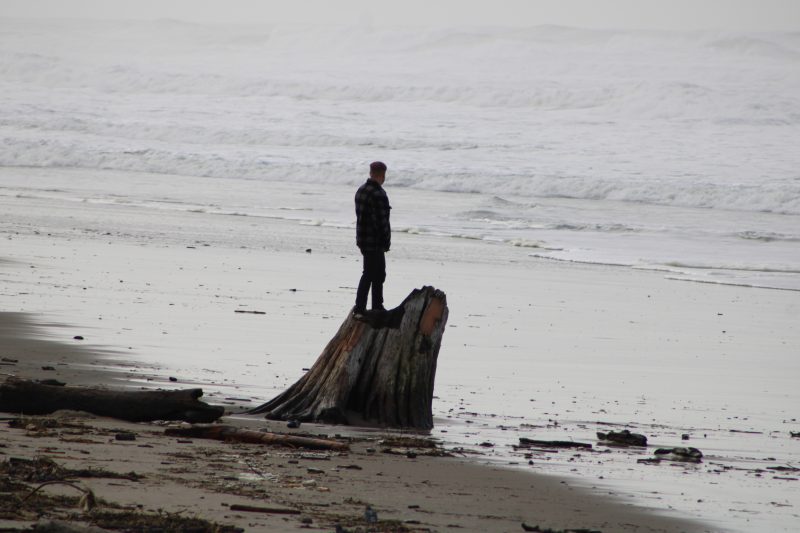
Some could be observed standing and playing on logs, which is not safe as sneaker waves are exceptionally hazardous during a King Tide.
Debris peppered beaches in an untidy mess, with logs rolling dramatically into the surf.
Local residents compared this King Tide to previous incidents of Mother Nature’s destructive force and beauty. They said if a storm system had accompanied this King Tide, it would have been massive, but were not impressed with this year’s showing. They made comments about how people shouldn’t be on the beach because it wasn’t safe.
Beach access points from Newport to Lincoln City were swarmed with visitors seeking a glimpse of the last weekend of King Tides.
National Weather Service Portland issued a sneaker wave alert in Lincoln City for Saturday and Sunday (Photo by Justin Werner)
National Weather Service Portland (NWS) issued a Beach Hazards Statement for the Central Oregon Coast calling for an increased chance of sneaker waves for Saturday and Sunday.
NWS said Parigean Spring Tides are impacting seas which creates a “high sneaker wave threat” starting Saturday morning and lasting through Sunday afternoon.
A Parigean Spring Tide occurs when the moon is either new or full and closest to Earth.
Sneaker waves can knock people off of their feet and pull them into the frigid Pacific Ocean which may lead to serious injury or death. Stay off of logs, rocks and jetties and never turn your back to the ocean.
The alert was issued at 6:41 p.m. Thursday for the North Oregon Coast, Central Oregon Coast and South Washington Coast.
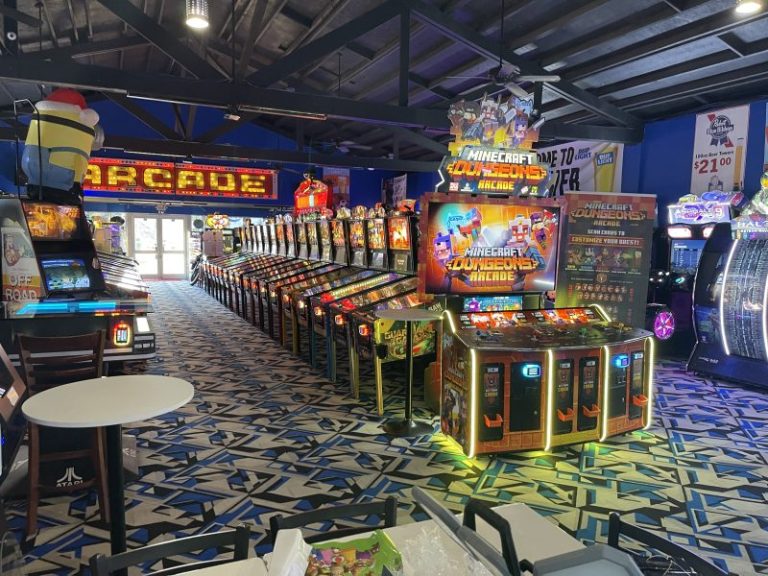
Over 130 games fill Game Over Arcade in Lincoln City
Chris Donner sits at a table inside Game Over Arcade and explains the intricacies of running the business while simultaneously managing to protect his two-year-old son from a heavy toy the child is about to pull down on himself.
He doesn’t miss a beat or even look in the direction of the kid as he deftly grabs the toy mid-air while going on about new games he has at the arcade. Obviously a veteran parent (military veteran too) for his ability to multitask during an interview, Donner has brought back what was once a booming industry in the 80s and 90s by modernizing the business model and keeping games fresh with regular new additions.
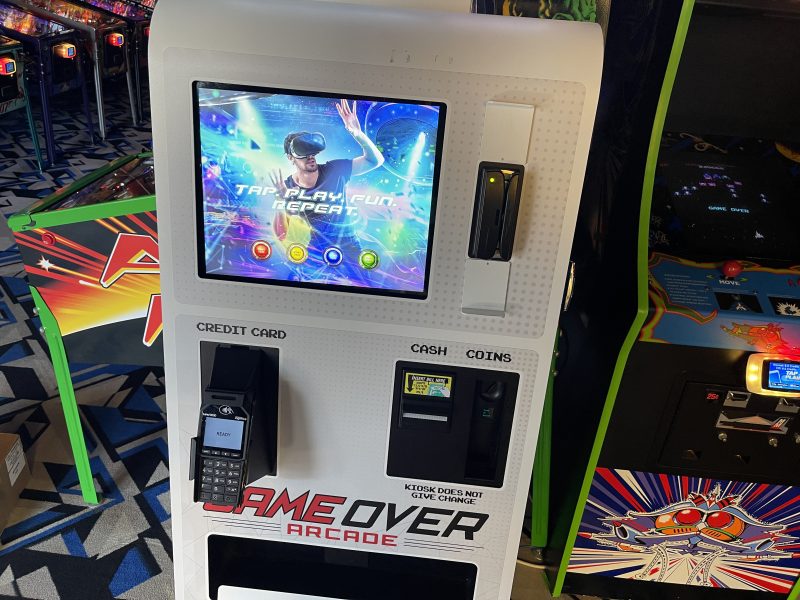
Donner made the decision recently to move from the “old-school” quarters-based system for his arcade games to a more modern card system, where parents of gamers can load a card up with cash, coins or a debit card. Plastic holders can register their card and if they spend enough money at the arcade, they can get VIP status, where a 25-30 percent discount is applied from then on to all the games at Donner’s establishment.
No more quarters at Game Over as the business has moved to a card-based system
“The VIP is good for life,” Donner said. “You can load up money from your phone right to the card, so it’s really cool.”
Bringing in new games is a highlight for Donner, as evidenced by him riding down on the platform of the game delivery truck. Keeping things fresh is a key part of the business according to Donner, and new games show up at Game Over consistently.
Asphalt Legends 9 Deluxe is a racing game where players need to wear a seatbelt. The game features a 5D movement system with up, down, left, right and forward delivering a unique driving experience. Hitting the flashing NITRO button greets the user with a blast of air to the face.
Pinball fans will rejoice at the newly acquired James Bond Thunderball Limited Edition. Sean Connery graces the backglass brandishing his pistol in this sought after pinball game. Game Over has 30 or more pinball games at any given time.
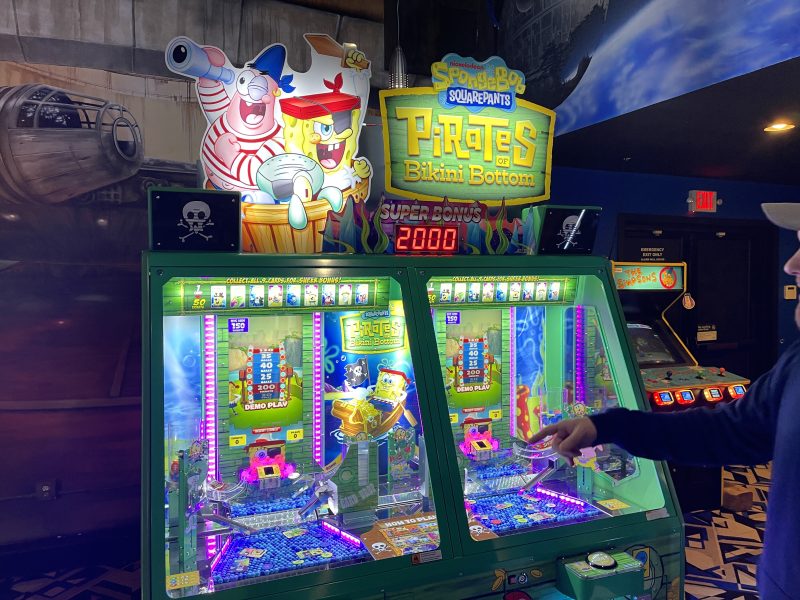
Kids get a kick out of the SpongeBob SquarePants Pirates of Bikini Bottom game where tickets can be won to use in a new prize system Donner now offers. Multiple games now give out tickets and players can walk up to a kiosk and claim their own prizes. No person needs to be at the counter to count tickets at Game Over as the process is fully automated. Game Over has given out six PlayStation 5 console systems to winners in the last year.
A fully automated machine let’s players redeem tickets for prizes
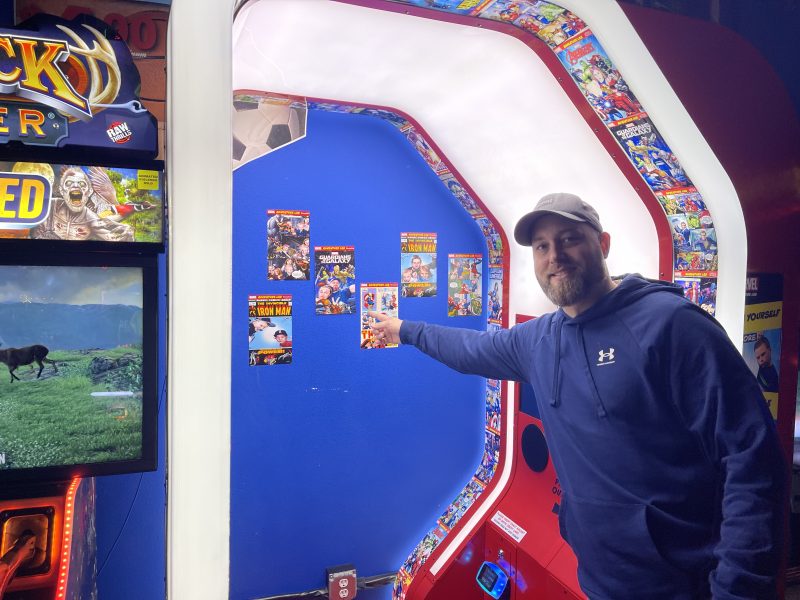
While it’s not a game, photo booth Marvel Adventure Lab puts picture takers into their own comic book. Users pick a Marvel character, pose for a picture and are transformed into comic style. “It’s new and popular,” Donner says.
Game Over Arcade Owner Chris Donner points to a comic-style picture he had taken in the Marvel Adventure Lab
Jenn Donner, also Owner of Game Over Arcade, has delved into the candy making business and has created freeze dried salt water taffy balls that melt in your mouth. A wide range of flavors seem to be intensified by the creation process and the candy does not get stuck in your teeth.
Jenn also made what she is tentatively calling “Nerd Bites,” which are a puffy candy ball with Nerds sprinkled on the outside. “Those are definitely my favorite,” Chris said.
Jenn hopes to start selling the candy at the arcade soon to compliment the bar and pizza options already available.
The Donners say Game Over made it through the pandemic and rough economic conditions and is here to stay. Business is good and their family is proud to be a part of Lincoln City.
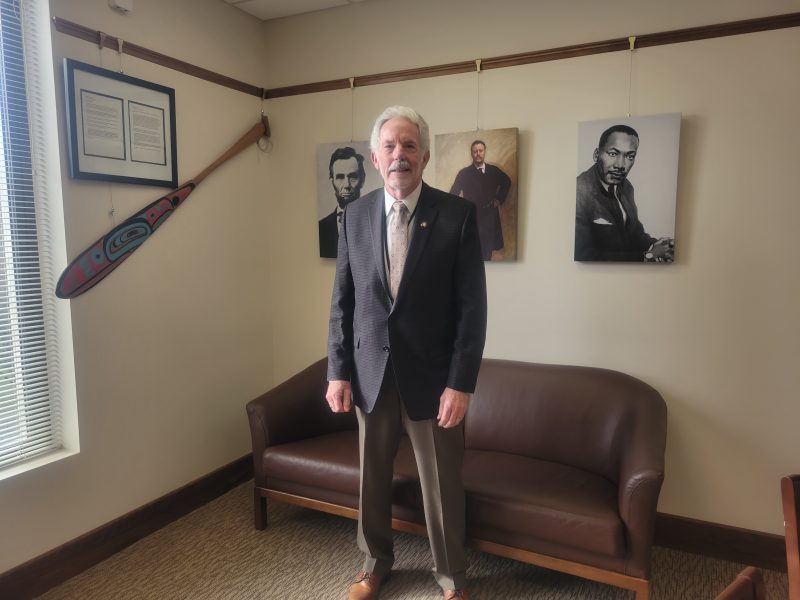
State Senator Dick Anderson in his Salem office (Photos by Don Williams)
State Senator Dick Anderson, (R)-District 5, sat down for an interview with Lincoln City Homepage to share his thoughts on the upcoming 82nd congress which started Jan. 17.
Homepage: “You’ve just finished your first biennium any thoughts, reflections or surprises?”
Anderson: “I don’t think there were any surprises because I was well acquainted with the system. Good people, a lot of agreement. Disagreements were usually on how to get to the end game.
“The early reaction that I had at the end of the long session in 2021 was one word: ‘undervalued.’
“Where does a minority party senator have any real input? People were courteous. I was never hammered down in committee meetings and people would listen but did it really have an impact? ‘Undervalued.’
“That is why I took a different tack after the short session in (participating in) Task Force meetings to have some influence in how bills were going to be crafted.”
Homepage: “You’re a first time Senator, what has the reaction been from others that have been in the legislature longer than you?”
Anderson: “I was pleased because I’ve had a lot of compliments of my ability, as a Freshman Senator, to grab hold of what is going on within the process. And by my committee assignments and continually being asked to participate in things. I’m pleased where I’m positioned.”
Oregon State Capital building
Homepage: What’s an average day like for a state senator?”
Anderson: “I commute to Salem for 8 a.m. meetings. So I get there well before eight to get ready. Committee meetings will be an hour and a half down in the hearing rooms. Then I’ll have a floor session at 11 a.m. and the Republican caucus will meet beforehand at around 10 a.m. to go over bills. We do try to wrap up the day around 5 p.m.”
Homepage: “So, clearly this is a fulltime job.”
Anderson went on to explain the demands on his time after scheduled hours on things like meeting with different lobbying groups, concerned citizens, driving to locations within his district to attend meetings and view proposed projects.
“I joke that I gave up golf as a hobby for this,” he said.
“This is a citizen’s legislature. It’s a full time job. So, for me, it worked well because I’m retired. I can’t imagine how a person that has to work in a job can get time off. I don’t think we’re very considerate of that. It’s one thing to take a leave of absence for six months (for the long session) or thirty-five days in (short session) but the rest of the year there are meetings all day long and at inconvenient times.”
Homepage: “Do you have staff to help you?”
Anderson: “I have great staff. One full time Chief of Staff and during sessions I have the funds to add a second person essentially to take calls and respond to emails and such. And interestingly enough we have Megan Davis, who received a Sea Grant fellowship to work on her doctoral degree, helping with ocean related legislative issues for the Coastal Caucus. She will be working for the entire long session with both my and Representative David Gomberg’s (D-House District 10) offices.
Homepage: “The Siletz reservation falls within your district. What is the state’s relationship with them as a sovereign nation?”
Anderson: “They are a separate nation but they’re included. They need to have a voice. I’ve advocated that and have voted no on some bills because they (Confederated Tribes of Siletz Indians) weren’t included, but impacted.”
Homepage: “Do you have an example?”
Anderson: The Forest Accord. How to manage forests. The governor (former Governor Kate Brown) brought together (various stakeholders) and came up with an accord on how to best manage forests. They left the Tribes out. The Tribes weren’t at the table. My floor speech was, ‘I’ve heard all session about needing to involve everybody and here’s an example of where that didn’t happen.’ As a matter of fact, I introduced a bill to push the conversation whenever natural resources or gambling or any of these things that the tribes have an interest in. They need to be at the table. It went nowhere.”
Anderson: “I’ve got four of the nine federally recognized tribes in Oregon in my district and five of the casinos. And generally they’re the largest employer. There’s an economic impact and they are not to be ignored.”
Homepage: “Any last thoughts on the upcoming session?”
Anderson: “It’s not for everybody quite frankly. I think you would need counseling or therapy if you do this job. It can be tough in places; the criticism. Not everybody loves you. You’re going to make fifty-percent of the people mad with every vote. In the end I’m voting for what I think my district needs.”
Homepage: “Thank you for your time.”
Anderson: “Anytime, always happy to answer questions when I’m able.”
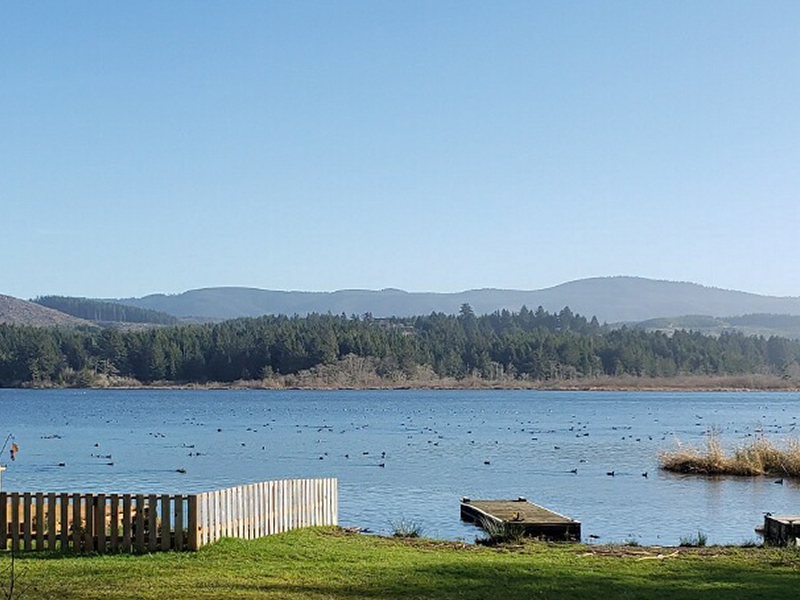
The Devils Lake Water Improvement District (DLWID) seeks to bring grass carp back to curb invasive water weed growth wreaking havoc in Devils Lake.
Devils Lake Neighborhood Association (DLNA) sent out an email asking people to send a letter to the Oregon Department of Fish and Wildlife (ODFW) in an effort to reintroduce sterile grass carp into Devils Lake to deal with the elodea invasive species.
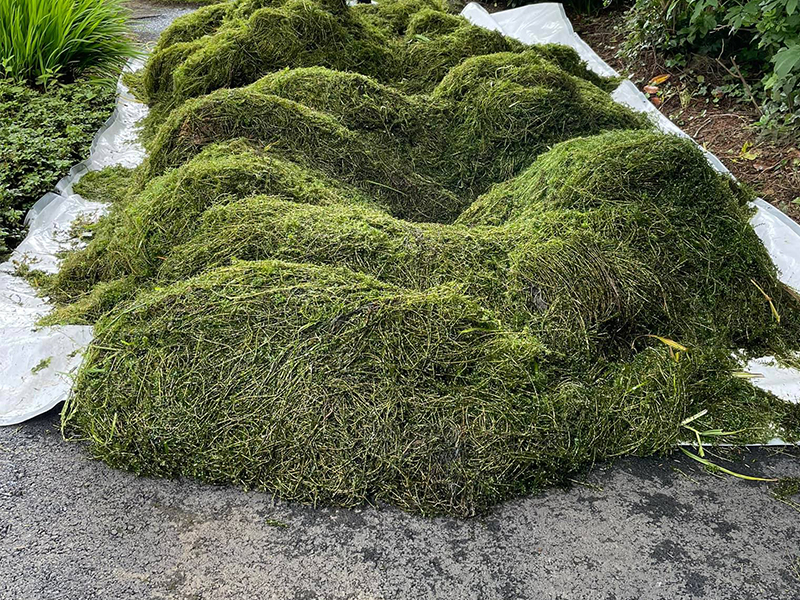
Photo by Devils Lake Navigator on Facebook
DLWID and its board of directors have been working for the past few months to get the required permit from ODFW and is “nearing the finish line” according to the DLNA. In order for the permit to be processed, a change to Oregon’s Administrative Rules needs to be made.
From the DLNA:
We have been working extensively with ODFW staff to draft the required rule changes. Once finalized, these draft rule changes will be presented to the ODFW Commission in February with a recommendation from staff for approval. The District is optimistic that these rules will be approved leading to the successful placement of grass carp in late spring of 2023.
We have been assured that the ODFW Commission will place this issue on its agenda for their meeting held February 16th and 17th, 2023. Our attorney Sarah Stauffer-Curtiss from Stoel Rives will be making comments on behalf of the lake. We are not recommending that our public attend this meeting as we feel it will be more effective for the Commission to hear our support for the rule change via written submissions.
To assist DLNA and DLWID accomplish their goal of getting the carp into the lake to solve the elodea problem, a letter has been put together and the Devils Lake organizations are asking citizens to send it to ODFW Commissioners by Feb. 14.
Copy of the letter:
Dear commissioner:
Devils Lake is an integral part of my neighborhood and now more than ever our beautiful lake needs our help. The Devils Lake Water Improvement District (DLWID) is pursuing a permit under OAR 635-056-0075(2) from the Oregon Department of Fish and Wildlife (ODFW) to re-introduce sterile grass carp into Devils Lake. In furtherance of this goal the District has submitted a permit application which also serves as its management plan setting forth the timelines, policies, and processes that will be used for the re-introduction and ongoing management of grass carp in Devils Lake. In order for our permit to be processed certain changes to the Oregon Administrative Rules (OAR’s) will be presented by ODFW staff for your consideration in the February Commission meeting.
I would like to express my sincere appreciation toward the ODFW staff for working through these issues and identifying the OAR changes that are currently before you for consideration. I would also like to thank you in advance for the pending approval of the required rule changes. A positive response by the Commission will allow the Devils Lake Water Improvement District to begin stocking sterile grass carp this spring.
The stakes couldn’t be higher as over the past year, the situation in Devils Lake has become dire with the explosive growth of elodea. In 2019, DLWID conducted a plant survey which was used to map plant biomass in the lake. At that time, elodea was discovered in a limited area immediately adjacent to Devils Lake State Park boat ramp. In August 2022, the Devils Lake Neighborhood Association performed an extensive survey of the lake indicating 48.6 percent of the lake by volume was occupied with elodea. Surface coverage of the weeds was 40.1 percent, with 100 percent of the bottom of the lake covered with elodea. Engineering estimates of the volume of material indicate as much as 116 million cubic feet of elodea present at the time of the survey.
Given the shallowness of the lake, elodea is greatly impacting all beneficial uses of Devils Lake, including the migration of native coho salmon into Rock Creek. Native freshwater clam beds have disappeared in some areas of the lake, impacting otters. Limited visibility is impacting the use of Devils Lake as a nesting and feeding ground for bald eagle, osprey, egrets, herons and migratory birds. Many areas of the lake have become unnavigable to boats and unsafe for swimming. Continuing to allow the explosive growth of elodea into Devils Lake may result in the introduction of this invasive species into other water bodies throughout the Pacific Northwest through direct transmittal on watercraft. Although the Devils Lake Water Improvement District is committed to implementing a multi-pronged approach to addressing elodea, the introduction of grass carp into Devils Lake is vital to a long-term solution to this problem.
To ensure that Devils Lake Water Improvement District has the tools necessary to ensure the lake can be enjoyed by Oregonians for generations to come, I request that the Commission vote in favor of the proposed changes to OAR 635-056-0075(1)(a).

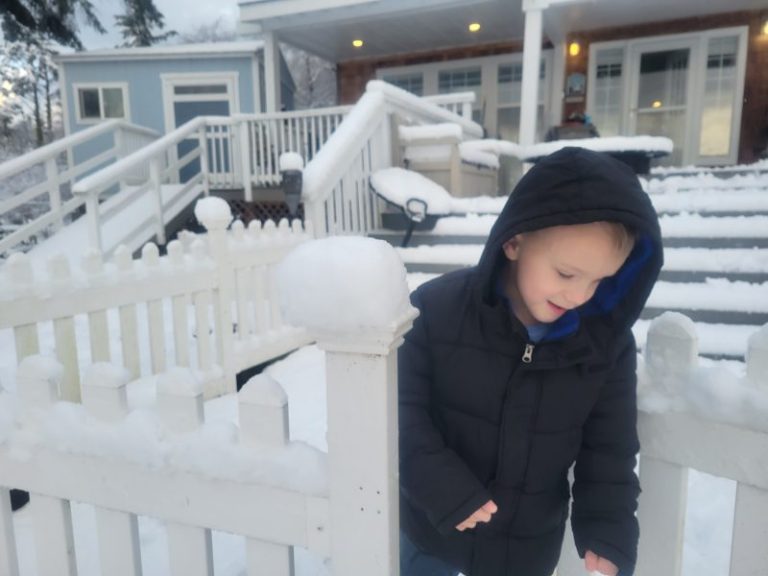
 Lincoln City doesn’t usually get a lot of snow but, wow, did we ever get some snow last night. By most local’s estimations there is between 4 and six inches of accumulated snow throughout the area.
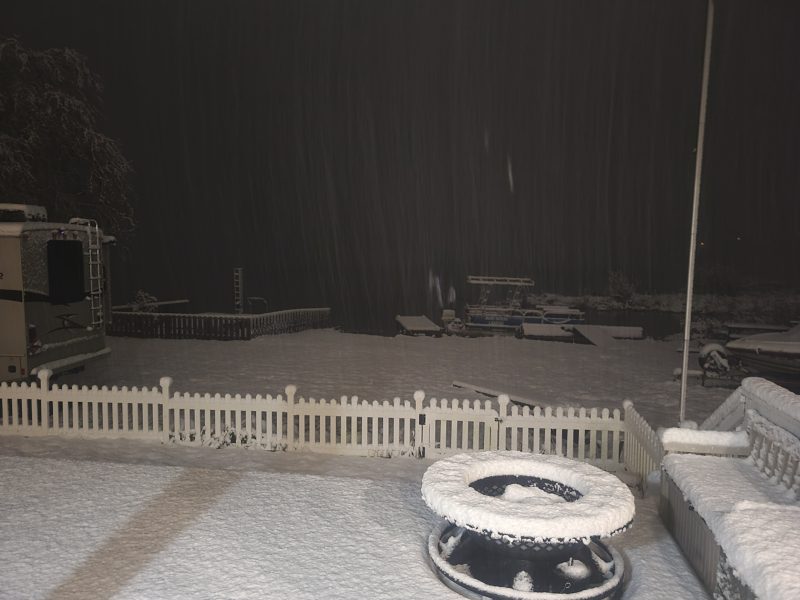 Reports and photos began appearing on Lincoln City Homepage community page just after midnight with reports of snow falling around town. By morning’s light it became apparent we had a snowstorm on our hands.
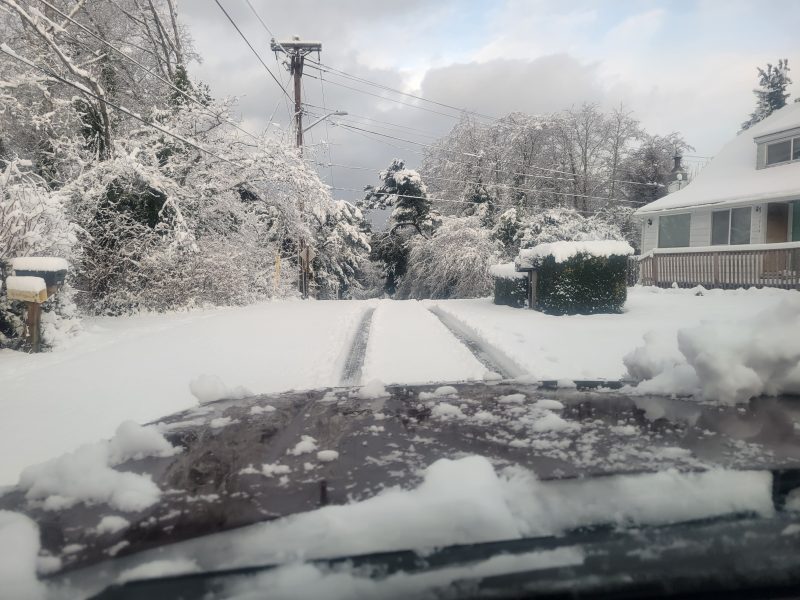 This reporter attempted to drive around to get some photos this morning but the side roads near NE 6th Dr were impassible. High snow accumulations along with downed trees and a car in a gully made it reckless to even try to navigate towards Hwy 101.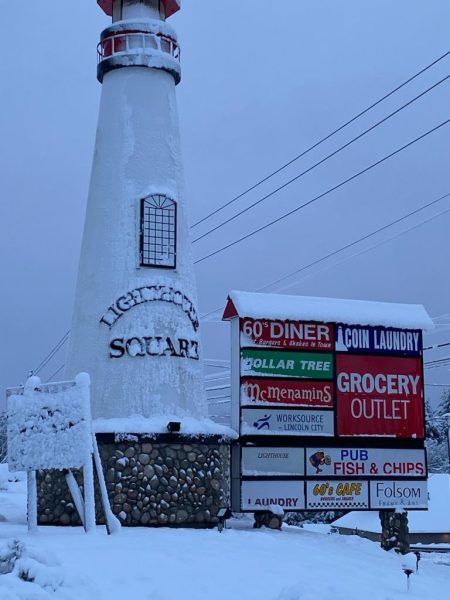
 SALEM, Ore. –Senator Dick Anderson (R-Lincoln City) has been appointed to the